What Utility Connections Does Beer Brewing Equipment Require?
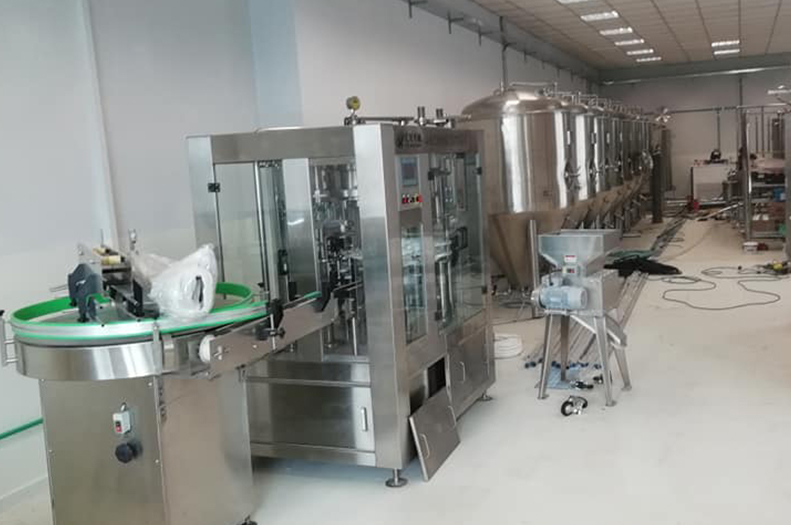
A commercial brewery needs more than electricity and water. A typical process may require potable or treated water, steam or electric heating, chilled glycol, compressed air, CO₂, drainage, ventilation, and wastewater capacity, with several systems operating at the same time. EPA materials report that breweries can use roughly 4–12 gallons of water per gallon of beer, while older EPA industry data recorded much higher wastewater figures at some large facilities. Electrical demand also changes sharply when heating, refrigeration, pumps, packaging, and CIP operate together. For a brewery planned around a 20 hL brewhouse, the utility schedule should therefore show connection size, pressure, temperature, flow rate, electrical phase, and maximum simultaneous demand for every machine. The Brewing Equipment supplier should provide those figures before installation so the building services can be sized around the actual process.
A useful brewery utility plan starts with electricity because almost every production area depends on it. Pumps, control cabinets, agitators, glycol chillers, compressors, conveyors, packaging machines, lighting, and instrumentation may all operate during the same production period. A 480 V three-phase supply is common in U.S. industrial facilities, while many European sites use 400 V three-phase power at 50 Hz; the exact requirement has to match the equipment nameplate and local electrical code.
Electric heating deserves separate attention. A 20 hL brewhouse using several electric heating elements can require substantially more service capacity than the same system heated by steam. A plant engineer should review rated power, full-load current, starting current, duty cycle, and simultaneous use rather than adding only the largest nameplate figures. The U.S. Department of Energy provides industrial assessment tools covering motors, pumps, process heating, steam, compressed air, and lighting.
| Utility | Typical information to confirm before installation |
|---|---|
| Electricity | Voltage, phase, frequency, kW, amperage |
| Water | Flow rate, pressure, temperature, pipe size |
| Steam | Pressure, kg/h or lb/h demand, condensate return |
| Glycol | Supply temperature, flow, pressure, pipe size |
| Compressed air | Pressure, flow, air quality |
| CO₂ | Supply pressure, storage type, points of use |
| Drainage | Outlet size, peak flow, temperature |
| Ventilation | Air volume, vapor extraction, gas monitoring |
Water requirements depend on both production and cleaning. EPA publications cite an average brewery range of about 4–12 gallons of water for each gallon of beer produced, although individual breweries can perform outside that range depending on process design and cleaning practices. The water line therefore needs enough pressure and flow for brewing liquor, hot-liquor tank refill, vessel rinsing, CIP, hose stations, keg washing, and packaging.
Water quality also affects equipment selection. Brewing water may require filtration, softening, reverse osmosis, carbon treatment, or mineral adjustment, while cleaning water may not need the same treatment. Separating these uses can reduce treated-water demand. EPA guidance published in 2025 notes that industrial water use varies widely by facility and recommends reviewing how water is used at each process point rather than applying one generic figure.
Hot water planning then connects water supply with the heating system. A hot-liquor tank may be heated by steam, electric elements, or another approved source, and its recovery time affects the brewing schedule. For example, a brewery producing four 20 hL batches in one day may need rapid refill and heating between brews, while a one-batch-per-day facility can accept a slower cycle. The utility schedule should show the required tank recovery period in minutes, not only tank volume.
Steam-heated brewhouses introduce another set of connections. The brewery may need a boiler, steam header, pressure regulator, steam traps, condensate piping, feedwater treatment, fuel supply, combustion air, and a flue system. Steam demand rises when the kettle and hot-liquor tank heat at the same time, so a boiler sized only from average hourly consumption may not match actual production.
For a steam system, the supplier should specify steam pressure and maximum consumption for every jacketed vessel. A steam distribution line that is too small can increase pressure drop and reduce heating performance at distant vessels. Condensate removal also matters because each kilogram of steam that condenses in a jacket becomes approximately one kilogram of condensate that must leave the system. The mechanical design should account for this at the same time as steam capacity.
Glycol refrigeration serves a different part of the process. Fermenters and bright beer tanks commonly use cooling jackets connected to a central glycol loop. The refrigeration plant must handle fermentation heat, tank temperature maintenance, crash cooling, heat entering the piping system, and any other equipment connected to the same circuit.
A brewery with 200 hL of fermentation capacity may need substantially more refrigeration than one with the same brewhouse size but only 80 hL of cellar capacity. The installed chiller should therefore be selected from the fermentation schedule, target cooling temperatures, tank jacket area, expected simultaneous cooling, and required pull-down time. Tank jacket connections also need insulated supply and return lines so the chilled fluid reaches the vessel without unnecessary heat gain.
Wort cooling adds another water and refrigeration demand. A plate heat exchanger may use incoming cold water, chilled water, or a two-stage arrangement. The required exchanger size depends on wort temperature entering the exchanger, target fermentation temperature, cooling-medium temperature, flow rate, and desired transfer time.
A useful design example is a 2,000 L wort batch that must leave the brewhouse near boiling temperature and reach a yeast-pitching temperature suitable for the recipe in a controlled transfer period. If the available cooling water is warm during summer, the same exchanger may perform differently than it does in winter. Recording water temperature by season gives the equipment supplier better design data than using one annual average.
“Many breweries use 4 to 12 gallons of water per gallon of beer.” — U.S. EPA National Water Reuse Action Plan, 2022.
Compressed air becomes more important as automation increases. Pneumatic butterfly valves, actuators, packaging machines, keg washers, and control devices may all use plant air. The compressor must be selected from the combined air demand, not from the largest individual machine.
A brewery should specify pressure, cubic feet per minute or liters per minute, dew point, filtration level, and oil content where applicable. A small manual cellar may use very little compressed air, while a packaging area with several pneumatic machines can create a much higher demand. In industrial systems, the U.S. Department of Energy treats compressed air as a separate utility category because compressor operation, pressure, leaks, and end-use requirements can materially affect electricity use.
CO₂ piping also needs its own design. Breweries use CO₂ for tank purging, carbonation, beer transfer, keg filling, and packaging. The supply system may use cylinders, bulk storage, or another approved arrangement, with separate regulators for applications that require different pressures.
Ventilation belongs in the same planning package because carbon dioxide can accumulate in enclosed areas. Tank rooms, packaging spaces, and other low-level or poorly ventilated areas may require mechanical ventilation and CO₂ detection based on site conditions and applicable codes. OSHA ventilation requirements are intended to maintain contaminant concentrations within established limits where ventilation is used for exposure control.
Drainage is another utility that must be sized around actual brewery work. Cleaning a tank can discharge a large amount of water in a short period, and several drains may receive flow at the same time. A 2022 EPA document notes that brewery water use can create considerable liquid waste, while Brewers Association benchmarking resources focus specifically on reducing water consumption and wastewater generation.
Floor drains, trench drains, process drains, and sanitary drains should be located from the production layout rather than added after equipment placement. Brewhouse areas often need drainage for hot water and washdown, while fermentation and packaging zones may have different discharge patterns. Drain temperatures, pH, suspended solids, and peak flow should be reviewed before connection to the building sewer.
CIP adds several services at once. A typical cleaning system may need water, hot water or steam, electricity, compressed air, chemical supply, sanitary return piping, and drainage. Spray devices and circulation loops require sufficient flow and pressure, while the cleaning solution must reach the required temperature for the intended cleaning cycle.
A brewery with 10 fermenters may need to clean vessels at different times, so CIP planning should also consider whether the system will serve one tank at a time or several circuits in a defined sequence. Pipe length, pump head, tank elevation, solution volume, and return-line routing all affect the design. A short, well-arranged CIP circuit can require very different pump conditions from a system serving tanks 40 meters away.
Packaging equipment adds utility demand that is easy to miss when the brewery is planned around the brewhouse alone. A canning line may require electricity, compressed air, CO₂, water, drainage, and sometimes vacuum service. A keg washer can require hot water, steam or electrical heating, cleaning chemicals, compressed air, CO₂, and a high-capacity drain.
The plant should therefore calculate utility demand with packaging running at the same time as cellar cooling and cleaning. A brewery that plans 1,000 cans per hour today may install equipment capable of 2,000 cans per hour later, so the electrical panel, compressed-air header, water pipe, and drain capacity can be reviewed for future expansion before walls and floors are finished.
Wastewater quality deserves attention alongside wastewater volume. Historical EPA data for large U.S. brewing facilities reported average raw wastewater concentrations around 1,622 mg/L BOD and 772 mg/L suspended solids, although modern brewery performance varies by process and treatment approach. Local discharge limits can cover pH, temperature, BOD, COD, suspended solids, fats, oils, and other parameters, so the brewery should confirm requirements with the local authority before final drain and pretreatment design.
A practical utility schedule should be issued with the equipment layout and process flow. Each tank, pump, chiller, CIP skid, packaging machine, and boiler should have a connection point, utility type, pressure, temperature, flow, electrical specification, and installation note. Including the installation year, such as 2026, in the engineering record also helps distinguish the original design from later additions and upgrades.
The final connection plan should then be checked against local plumbing, electrical, mechanical, fire, wastewater, pressure-vessel, and occupational-safety requirements. A brewery may use one utility system for several processes, but the pipe size, electrical service, refrigeration capacity, and drainage rate still have to match the periods when those processes overlap. A detailed schedule prepared before fabrication gives the contractor measurable requirements for every service rather than leaving connection sizes to site installation.